
What Happens if Probate Property Falls Into Disrepair?
By Probate Property Help.net Editorial Team | Reviewed for legal context by David McNickel
A probate property that falls into disrepair creates cascading consequences for the estate, the executor, the beneficiaries, and any prospective sale.
Once deterioration takes hold – whether from neglect, deferred maintenance, vandalism, or environmental exposure – the resulting problems multiply: value declines, insurance coverage may be compromised, local authorities may intervene, and the executor may face personal liability for the loss suffered by the estate.
Understanding these consequences, and knowing how to prevent them, is essential for anyone managing real estate through probate.
Probate Property Legal Liability Risks for the Executor
The executor’s fiduciary duty explicitly includes the obligation to preserve estate assets. When estate property deteriorates during the administration period, and that deterioration is attributable to the executor’s failure to take reasonable protective measures, the executor is exposed to a surcharge claim – a court-ordered obligation to compensate the estate from their personal assets for the resulting loss.
The legal standard is not perfection. Executors are not expected to restore properties to showroom condition or to prevent every possible form of deterioration. The standard is reasonable diligence – taking the steps that a prudent person in the same position would take to protect a valuable asset from preventable damage.
What constitutes a failure to meet that standard:
- Allowing a vacant property to go uninsured or with inadequate insurance, resulting in an uncovered loss
- Failing to maintain minimum heating in a cold-climate property, resulting in burst pipes and water damage
- Ignoring reported roof leaks or other ongoing structural issues that worsen over time
- Failing to secure a property after it becomes vacant, resulting in vandalism or unauthorized occupation
- Allowing property taxes to fall into delinquency, resulting in penalties, liens, or tax sale proceedings
Any of these failures can serve as the basis for a surcharge claim by beneficiaries who suffered financial loss as a result. In contested estates with fractious beneficiaries, this is a real and recurring risk.
Impact on Sale Value
The most direct consequence of property disrepair is a reduction in the sale price achievable for the estate. The relationship between condition and price in real estate is well-established: buyers discount properties in poor condition relative to comparable homes in better shape, and the discount is typically larger than the actual cost of the deferred maintenance.
This discount effect is particularly pronounced in probate sales for several reasons:
- Probate properties are often sold as-is, which means buyers bear the repair costs themselves. They price those costs into their offers, often conservatively.
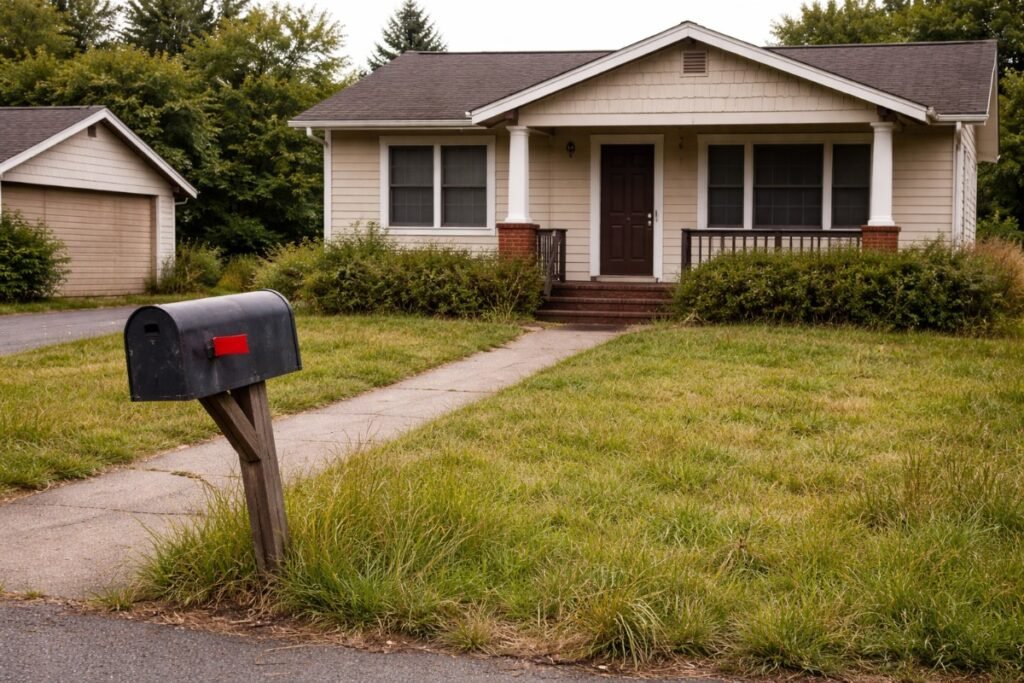
- The visible evidence of neglect – overgrown landscaping, broken windows, water stains, damaged fixtures – signals uncertainty about what else may be wrong. Buyers applying uncertainty discounts assume more issues than are actually present.
- Properties in poor condition attract a narrower buyer pool, typically limited to investors and renovation specialists. Competing with a smaller pool reduces the likelihood of a strong price.
The financial math is straightforward: a property worth $350,000 in good condition may sell for $280,000 or less in significantly deteriorated condition, a loss of $70,000 or more to the estate’s beneficiaries.
Insurance Claim Issues
A property that has fallen into disrepair may face complications when an insurance claim is made for damage that occurred during or after the deterioration period. Insurers can and do deny or reduce claims when:
- The policy contains a vacancy clause that suspended coverage because the property was vacant for longer than the permitted period without the insurer being notified
- The claimed damage was caused or significantly worsened by the property’s deteriorated condition (for example, water damage that occurred through a long-neglected roof leak)
- Required maintenance conditions in the policy were not met at the time of the loss
- The insurer can demonstrate that the loss was foreseeable and preventable through reasonable maintenance
An insurer that successfully invokes any of these defenses may pay a fraction of the claimed amount, or nothing at all. This leaves the estate with both the cost of repairs and the loss of what the insurance was intended to cover.
See also: do you need probate property insurance for a vacant inherited home.
Court Oversight Consequences
When estate property deteriorates significantly, the probate court may take notice, either through its own oversight mechanisms or through a petition filed by a concerned beneficiary. The court’s responses to property disrepair situations can include:
Orders to Take Corrective Action
The court can issue an order requiring the executor to take specific action by a specific deadline – arranging repairs, obtaining proper insurance, securing the property, or selling it within a defined timeframe to prevent further loss. Failure to comply with such an order can result in the executor being held in contempt.
Executor Removal
A pattern of neglect with respect to estate property – or a single instance of significant loss resulting from inadequate maintenance – can serve as grounds for removing the executor and appointing a successor. Courts have considerable discretion in this area, and they use it when the evidence suggests that the current executor is not capable of, or willing to, perform the role responsibly.
Surcharge Orders
The court can surcharge the executor for the financial loss suffered by the estate as a result of the property’s deterioration. A surcharge is payable from the executor’s personal assets and can be substantial in cases involving significant property damage.
Appointment of a Special Administrator
In urgent situations – where the property is at imminent risk of further significant damage or where the executor is clearly not addressing the situation – the court can appoint a special administrator with authority to take emergency protective measures for the property while the underlying administrative issues are resolved.
Preventative Maintenance Planning
The most effective response to property disrepair is preventing it. A systematic approach to property maintenance during probate administration eliminates most of the risks described above. Key elements of a preventative maintenance plan:
Initial Property Assessment
Within the first week or two after appointment, the executor should conduct – or commission – a thorough inspection of the property. This assessment should cover the roof, foundation, plumbing, electrical systems, HVAC, exterior condition, and any evident deferred maintenance. The goal is to identify issues before they worsen and to establish a documented baseline of the property’s condition.
Immediate Securing and Insurance
Simultaneously with the initial inspection, the executor should ensure the property is physically secured against unauthorized access and that appropriate insurance coverage is in place. As discussed in the article on probate property insurance, standard homeowner’s policies are typically inadequate for vacant properties, and specialist vacant property coverage should be obtained. See also: what maintenance responsibilities do executors have for estate property.
Routine Inspection Schedule
After the initial assessment, the executor should implement a regular inspection schedule – typically weekly or bi-weekly for vacant properties – to identify new problems before they escalate. Each inspection should be documented in writing, with photographs where relevant.
Promptly Addressing Identified Issues
When an inspection identifies a maintenance issue – a damaged gutter, a broken window, evidence of water intrusion – the executor should arrange for it to be addressed within a reasonable timeframe. The appropriate urgency depends on the severity of the issue and the potential for it to worsen quickly.
Seasonal Maintenance Planning
Property maintenance needs vary by season. In winter climates, this means ensuring heating is maintained or the property is properly winterized, that snow and ice are managed to prevent damage and liability, and that the risk of pipe freeze is actively managed. In humid climates, it means monitoring for mold and ensuring adequate ventilation. The executor should anticipate seasonal maintenance needs and plan for them in advance rather than reacting to problems after they occur.
Addressing Existing Disrepair
When an executor takes over an estate and finds the property is already in significant disrepair – either from deferred maintenance during the owner’s lifetime or from events that occurred between death and the executor’s appointment – the priority is assessment and triage:
- Assess the scope of the disrepair – commission a professional inspection to document all issues and estimate repair costs.
- Determine what is urgent (security, water intrusion, structural risk) versus deferred (cosmetic issues that reduce value but do not worsen quickly).
- Address urgent issues immediately.
- Evaluate whether the deferred issues should be repaired before sale or disclosed to buyers as part of an as-is sale. In most cases, the as-is route is preferable for probate estates with significant repair needs.
- Confirm that adequate insurance is in place for the property in its current condition.
- Document all findings and decisions carefully for the estate record.
Conclusion
Probate property that falls into disrepair creates compounding problems: reduced sale value, insurance complications, potential court intervention, and personal liability for the executor. Most of these consequences are preventable through basic, systematic property maintenance – securing the property, obtaining appropriate insurance, conducting regular inspections, and addressing problems promptly when they are identified.
Executors who manage estate property proactively protect both the estate’s value and their own standing. Those who allow property to deteriorate through inaction accept risks that could easily have been avoided and that can result in real financial harm to the beneficiaries they are duty-bound to serve.
Return to property property management topics.
The information on this website is provided for general informational purposes only and does not constitute legal, tax, or financial advice. ProbatePropertyHelp.net is not a law firm and is not affiliated with any attorney, real estate professional, or government agency.